
I believe part of our job as Game Masters is to help cultivate heroes, which means giving them time and room to grow.
I wrote that line while revising another article and kept coming back to it, because there is considerably more packed into the idea than I originally intended. It raises questions about what we think a hero actually is, how much responsibility a Game Master carries for the development of the player characters, and how much control we should exercise over the stories that emerge from our games.
There is also a dangerous way to read it. If I believe my job is to cultivate heroes, it would be easy to decide that I am responsible for making sure the characters become heroes, and from there it is only a short walk to protecting important characters from bad die rolls, nudging players toward the decisions I think they should make, constructing satisfying arcs on their behalf, and quietly rearranging events so that everything arrives at the dramatic conclusion I had in mind. That is not what I mean at all.
I do not think the Game Master creates heroes. I think the Game Master creates the conditions in which heroism becomes possible. We establish what is happening in the world, make the stakes understandable, place the characters at points where their decisions can matter, and then allow the players, the rules, the dice, and everyone else at the table to determine what happens next. Sometimes the character saves the kingdom. Sometimes the character dies trying. Sometimes the character looks at the kingdom, decides everyone involved is terrible, and wanders off to save a farmer instead. All three can produce a good game.
The Game Master creates the conditions in which heroism becomes possible.
Heroism Happens in the Moment
I have a fairly broad definition of a hero: someone who takes extraordinary action that changes the trajectory of events. I am deliberately leaving moral perfection out of that definition. A scoundrel can perform a heroic act. Someone who has spent most of the campaign acting selfishly can recognize that a larger problem has arrived and decide, perhaps for the first time, to put someone else’s interests ahead of their own. A person can act heroically in one moment and villainously in the next. Heroism is not a finish line.
This is one of the reasons I have never been especially interested in campaigns where the player characters are treated as heroes simply because they are the player characters. They are important to us because we are following their stories, but importance and heroism are not the same thing. For heroism to exist, something has to be happening that can be changed.
A village is being slowly strangled by bandits who control the only road to market. A noble family is preparing to seize a kingdom. A monster is feeding in the hills. Two countries are drifting toward a war neither can afford. A priest discovers that the god who has answered generations of prayers has gone silent. The scale is not particularly important, because saving one farmer from losing everything can be every bit as heroic within the context of that farmer’s life as turning back the army marching on the capital. What matters is that events have a trajectory. The Game Master establishes that trajectory clearly enough for the players to understand it and then provides points where the characters can interfere with it, and that is where the opportunity for heroism begins.
A Trajectory Is Not a Plot
The distinction between a trajectory and a plot matters a great deal to the way I run games.
If I tell everyone during Session 0 that the campaign is going to revolve around a kingdom descending into civil war, the players need to buy into that idea. If nobody at the table is interested in political conflict, refugees, divided loyalties, armies moving through the countryside, and all the other things that accompany a civil war, then I have probably pitched the wrong campaign to that group. That is fine. Not every campaign fits every table, and the solution is certainly not to trick the players into playing my civil war campaign anyway.
However, agreeing to play in a campaign about a civil war does not mean the players have agreed to follow the plot I imagined for it. Perhaps I create two major factions and expect the characters to choose between them. The players meet both, decide they cannot stand either one, and conclude that they have no interest in becoming soldiers, political operatives, or kingmakers. Instead they head toward the border, because they have become far more interested in what the war is doing to the people trying to escape it.
That does not mean the campaign has failed. Now I have refugees putting pressure on towns that lack the food or housing to absorb them. Trade routes are shifting. Soldiers are deserting. Mercenary companies that have not been paid may turn to banditry. People the characters met earlier have chosen sides, and some of those choices will eventually reach the PCs whether they participate in the central conflict or not. The civil war continues, and the characters have simply found their own place within it.
This is the point where a campaign starts becoming interesting to me, because I am no longer trying to move the characters through a story. The players and the world begin pushing against each other and changing one another as they go.
Emergent Storytelling Is the Thing RPGs Do Best
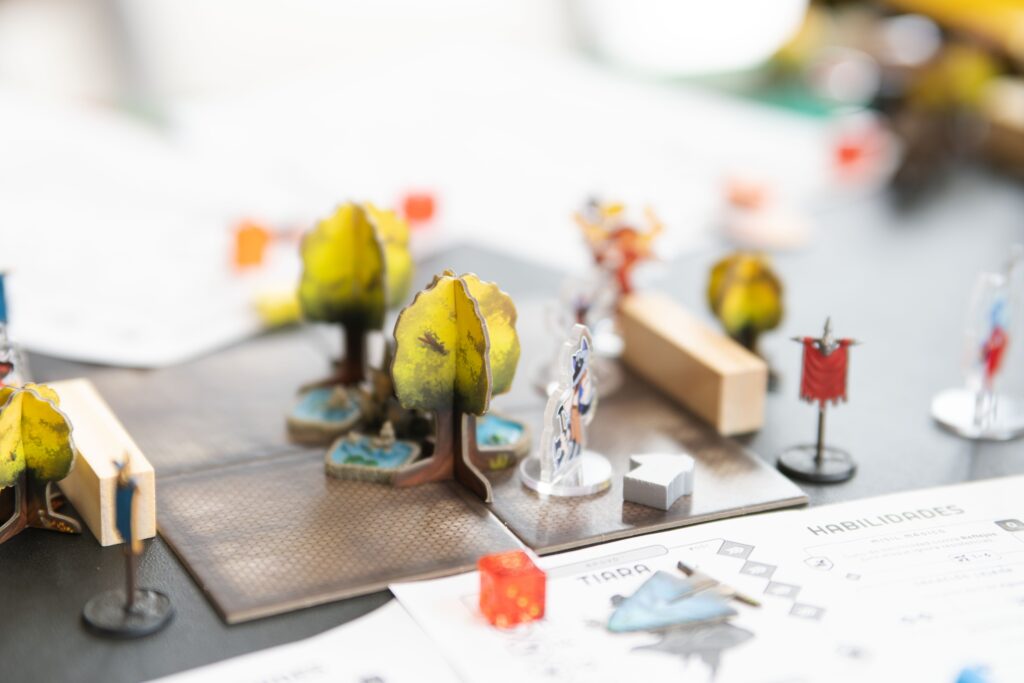
I believe strongly in emergent storytelling, although the phrase has become so broad that it risks meaning nothing at all.
At the beginning of most campaigns I run, I am doing most of the pushing. I create the initial setting, decide who the important NPCs are, give those NPCs problems, establish a few things already in motion in the surrounding world, and put enough hooks in front of the players that they can start making decisions. Early on, the characters are mostly reacting to things I created.
Then something changes. The players form relationships with NPCs. They anger people I expected them to befriend and grow attached to people I invented only because I needed somebody standing behind a bar. They ignore hooks I thought were fascinating and become obsessed with some minor detail I made up on the spot because somebody asked a question I had not anticipated. Their actions begin changing the setting, which means the NPCs now have to react to them. Those reactions create new situations, which produce new player decisions, which force me to reconsider what happens next. At some point the story stops flowing primarily from the GM toward the players and develops a genuine push and pull across the table.
I have experienced something similar in improvisational acting, but RPGs sustain it over weeks, months, and sometimes years. A throwaway decision from six months ago can suddenly become relevant because everyone at the table remembers what happened and recognizes the connection. That kind of moment is nearly impossible to manufacture with the same emotional weight, because its importance comes partly from the fact that nobody knew it would matter when it happened.
Let the Players Tell You What Matters
Some of the best recurring characters in my games were never meant to recur.
In a game of Torg, I created a lackey who existed only to serve the immediate adventure, and one of the players latched onto him. I no longer remember whether the fascination began as hatred, amusement, suspicion, or some mixture of all three, but the player cared about this person far more than I had expected, and that told me something. I brought the lackey back, made him a little more capable, and let the relationship develop. Eventually he became a much larger threat, because the player’s attention had transformed him into something important.
I had a similar experience in a D&D game with a goblin who managed to escape an encounter. One player tried especially hard to stop him and failed. Since the goblin survived, I brought him back later, a little more dangerous than before and carrying his own growing interest in the PC who had nearly caught him. Over time a real rivalry developed there. I never sat down before the campaign and wrote, “This goblin will become the character’s nemesis.” The table created that.
Player attention is information, and Game Masters sometimes ignore that information because we are too attached to the material we prepared. If the players spend twenty minutes talking about a minor NPC and two minutes talking about the villain I spent three hours developing, that tells me where the energy of the game currently lives. I can fight it and keep pointing them toward the thing I think they should care about, or I can see what happens when I give a little more oxygen to the thing they already care about.
This does not mean every joke becomes a campaign arc or that every NPC the players like suddenly has a secret destiny. Sometimes a bartender is just a bartender. It simply means I pay attention.
My Notes Are Not the Campaign
One of the governing rules behind the way I prepare games is that nothing is written in stone until the player characters have experienced it. I can have pages of notes describing the history of a ruined temple, but if none of that history has entered the game, I am still free to change it. My notes are preparation, not canon.
Imagine I decide the caravans disappearing along the northern road are being attacked by gnolls. I know where the gnolls are camped, why they are raiding the caravans, and what they intend to do next. Then something happens during play that gives me a considerably better idea. If the characters have not found tracks, spoken to survivors, encountered a raiding party, or otherwise learned anything that establishes gnolls as the answer, I can throw the original idea away without retconning anything, because nothing has actually happened yet.
Once the characters find gnoll tracks, however, the situation changes. Once they capture a gnoll and question him, more of it becomes fixed. Once they attack the camp, rescue the prisoners, and accidentally burn down half the surrounding forest, we have history, and those events belong to everyone at the table.
This is one of the reasons I am reluctant to retcon things after the fact. I would rather write around a mistake, explain an inconsistency through the fiction when I can, and keep moving forward. The campaign is not the perfect version of the story that existed in my head. The campaign is what happened at the table, and there is real value in preserving that.
My notes are preparation, not canon.
The Character Belongs to the Player
If the shared events of the campaign belong to the table, the player character belongs much more specifically to the player. That sounds obvious, but GMs cross this boundary easily, because character backstories are full of wonderful adventure material.
A player tells me their character has an estranged sister, a disgraced mentor, and a hometown they have not visited in twenty years, and I immediately have ideas. Maybe the sister joined the enemy. Maybe the mentor was innocent. Maybe the hometown has been destroyed. Maybe everything the character believes about one of those relationships is wrong. Any of those ideas might become a fantastic part of the campaign, but a player handing me a backstory is not automatically granting me unrestricted permission to rewrite it.
Agreeing to play in the campaign provides consent to a degree. The player knows I am going to create threats, complications, difficult choices, villains, and consequences. That does not mean I get to overrule the parts of the character’s history we have already agreed are true. The character belongs to the player, and my job is to create opportunities for the things the player created to become real in play.
If a character has a fear of abandonment written into the backstory, that fear does not really exist in the narrative until there are relationships where abandonment is possible. If the character believes they are a coward, I can create moments where courage might matter. What I cannot do is decide how the player is supposed to resolve those things. Maybe the coward becomes brave. Maybe the coward discovers that caution has kept everyone alive. Maybe the coward spends an entire campaign failing to overcome that fear.
Tragedy exists. Hamlet does not resolve his family’s problems and settle down to enjoy a healthy emotional life. The crew of Reservoir Dogs drives itself toward destruction, with Mr. Pink having the good sense to spend a significant portion of that final disaster hiding under a ramp. Not every character arc needs to arrive at emotional health, redemption, or triumph. The GM creates the opportunities, and the player decides what the character does with them.
Giving Heroes Room to Grow Does Not Mean Protecting Them
This is where my original line about cultivating heroes can become misleading. If I think characters need time and room to grow, does that mean I should protect them until they have finished growing? No, because heroism is not survival. Heroism is action.
History, mythology, literature, and film are full of people whose heroism is defined partly by their willingness to act when survival was uncertain or impossible. The Charge of the Light Brigade is remembered despite the disaster surrounding it. Martyr stories depend on people acting even though the consequences are terrible. Braveheart does not work because William Wallace receives a satisfying retirement. In Serenity, Jayne eventually reaches the wonderfully simple conclusion, “If you can’t do something smart, do something right,” and that is heroic precisely because doing the right thing does not guarantee the right outcome.
The same needs to be possible in an RPG. A character may have twenty sessions’ worth of unresolved relationships, personal ambitions, mysteries, and plans for the future when a run of bad decisions and terrible rolls puts them in mortal danger. I do not think all that unfinished business creates an obligation for me to save them. That may simply be the tragedy of the character.
My responsibility was to provide paths where the character could matter. I cannot walk those paths for the player, and I cannot guarantee where they lead. The player makes choices, the rest of the party makes choices, the opponents act, and the dice participate. If I quietly take control whenever those forces begin producing an outcome I do not like, then eventually the character’s story belongs to me rather than to the game.
Why I Stopped Fudging Dice Rolls
My thinking about dice fudging has changed over the years.
There is a play called Of Dice and Men in which dice fudging becomes a significant plot point, and the philosophy behind it is one I once understood quite well. The Game Master is crafting a story, which makes the GM a kind of ultimate editor, and if a die roll would damage the story, the GM has the ability to correct it. I used to think more like that.
The problem I eventually ran into was trust. Once the players know or suspect that I am changing die results, they no longer have any reason to believe the dice are determining what happens. When something terrible happens to their characters, they can wonder whether I chose to do it. When something wonderful happens, they can wonder whether I handed it to them. That changes the relationship at the table, because suddenly I am personally responsible for outcomes that the game used to produce. I do not want the players wondering whether I decided they deserved that critical hit. I want all of us staring at the die together.
So I roll openly. The dice need to have a role in the game that neither I nor the players completely control, because randomness creates uncertainty and uncertainty is part of what gives decisions weight. That does not mean I worship the dice, and a statistical edge case should not automatically dictate the entire experience at the table. It means the results stand.
The GM Controls the Adversary but Is Not the Adversary
There is a difference between changing a die and changing what an NPC decides to do.
Suppose a group of ordinary bandits gets extraordinarily lucky and lands three critical hits in quick succession. The encounter is now considerably more dangerous than anyone expected. I am not going to erase those critical hits, because they happened. I may, however, think carefully about what these bandits actually want. A bandit who knocks a character unconscious may decide to grab the character’s money pouch rather than spend the next attack stabbing a helpless body. That is not necessarily me taking pity on the player; a robber is generally more interested in loot than murder.
A particularly vile cultist may behave differently. If I have spent three sessions establishing that an opponent is cruel, I should not suddenly withhold that cruelty because experiencing it has become inconvenient. Cruelty described in my notes does not mean much. Cruelty experienced at the table is what makes the villain real.
The situation determines the action, but the action should flow from the motives and capabilities of the NPC rather than from my desire to defeat the player. The GM is not the adversary; the GM controls the adversary. I think of it a little like bowling. The person who sets up the pins is essential to the game, but that person is not trying to beat the bowler.
When I am running intelligent, experienced opponents, I owe it to the players to use those opponents effectively. When I am running hungry animals, panicked villagers, incompetent thugs, or creatures operating almost entirely on instinct, I should not suddenly turn them into master tacticians because I personally know the mathematically optimal move. We roleplay the opposition just as surely as we roleplay every other NPC.
The GM is not the adversary. The GM controls the adversary.
Fair Does Not Mean Winnable

All of this connects to how I think about encounter balance. I do not believe every encounter needs to be “fair,” if fair means the characters should have a reasonable expectation of defeating whatever is placed in front of them. I do believe the players should have a reasonable chance to survive, and winning and surviving are not the same thing.
Sometimes survival means retreating. Sometimes the party has to abandon the treasure, or hold a doorway long enough for everyone else to escape, or bargain, or hide. Sometimes the dragon wins. Those are not failed encounters. In fact, they are often the encounters players are still talking about years later.
Steamrolling an enemy can be fun, especially when the characters have earned enough power to finally crush something that once terrified them, but endlessly smashing ants with a hammer is not particularly heroic. There needs to be danger and uncertainty, and there needs to be some real possibility that the characters do not get everything they want. The GM’s job is not to guarantee victory. The GM’s job is to make sure the players understand enough about the situation to make meaningful choices about the risk.
Miscommunication Is Not Difficulty
This is an area where I am willing to be very direct with players. At the end of a session I may say, “You are heading into a boss battle next week, so prepare for that.” I would rather say that above the table than watch the wizard spend the next day preparing nothing but utility spells because I was so committed to preserving a surprise that the player had no useful way to understand the situation.
Within the fiction, I prefer to foreshadow danger. There are bodies. The woods have gone silent. Something enormous has damaged the stonework. Everyone in the nearby village refuses to use the old road after sunset. Whatever fits the situation.
The problem is that communication does not end when I finish speaking. There is a sender and a receiver. I may think my description of the blood-soaked floor could not possibly be clearer, while the players read it as evidence that something violent happened there three days ago and stroll into the room without taking any precautions. Maybe they missed my emphasis. Maybe they were distracted. Maybe my description was not as good as I thought it was. Maybe the warning only seemed obvious to me because I already knew what was waiting for them.
If I can tell that the players are making a major decision based on a misunderstanding of what I communicated, I am willing to step outside the fiction and clarify. I am not going to tell them exactly what will happen, and I am not going to give them the correct solution. I will make sure they understand that they are walking into significant danger. There is plenty of difficulty available inside an RPG without relying on players failing to correctly interpret my narration, and miscommunication is not a challenge I am particularly interested in testing.
Assume the Characters Are Competent
For similar reasons, I assume the player characters possess ordinary common sense. If the party is traveling through freezing weather and everyone owns winter clothing, I do not make them announce every morning that they put their coats on. I assume they do. They need to tell me when they are doing something unusual, such as deliberately leaving the cold-weather gear behind because they want to travel light.
I apply the same philosophy to character knowledge, because player skill and character skill are not identical. A player might know that a particular bird call in the real world indicates a nearby predator, while I might not know enough about birds to build that detail into my description of the forest. We cannot solve that conflict by pretending the fictional world perfectly replicates reality. This is why we have character sheets. Make the Nature check.
The player may be an emergency room physician, but that does not make the barbarian an emergency room physician. The player may know absolutely nothing about wilderness survival while playing a ranger who has spent thirty years living in the forest. The game provides a system for translating those differences. RPGs are not reality simulators; the rules help us guide fictional people through fictional worlds while giving everyone at the table a reasonably consistent understanding of what those characters can do.
Creativity Should Improve the Opportunity, Not Guarantee the Outcome
I want players to try ridiculous things. That is part of the pleasure of the medium.
A player tells me they want to leap from a balcony, grab the chandelier, swing over a guard, kick him into the fireplace, land beside the captain, and lift the key from his belt. Wonderful. Now I need to figure out what they are actually trying to accomplish. Some of that description may be color, and some of it may carry a mechanical effect. The player may just be trying to cross the room dramatically, or they may expect the guard to be knocked down and the key to end up in their hand.
My first instinct is never to say no. Nothing throws cold water on a player’s enthusiasm quite like being told, repeatedly, that they cannot try things. This is why “Yes, and…” from improvisational theater is so useful for Game Masters, although I think RPGs also need “No, but…” Sometimes the proposed action does not fit the physical assumptions, genre, or established reality of the game, and in those cases I want to understand what the player is trying to accomplish and find the closest version that does fit.
What I will not do is allow a fantastic description to eliminate the need for character capability. If the action is meaningful, the game needs a way to resolve it. The clever idea may earn advantage. I may allow a different skill than I normally would. The circumstances may make success easier. But the player still rolls, because otherwise we begin building a game where the player who delivers the most entertaining description receives abilities their character does not possess. Creativity should improve the opportunity, not guarantee the outcome.
Meaningful Choices Sometimes Close Doors
Players do not always like this part of my games. They would prefer to keep their options open, and honestly, so would I. Most of us would like to save the village, capture the villain, preserve our alliance with the king, keep the friendship of the rebels, hold onto the cursed sword, avoid the curse, and get home in time for dinner. The problem is that choices become less meaningful when no doors ever close.
Sometimes the party can save the village or chase the villain, but not both. Sometimes supporting one faction damages the relationship with another. Sometimes opening the tomb cannot be undone. The players should understand enough about the situation to know there will be consequences, but I do not think they need a perfectly clear preview of both possible futures. We almost never get that sort of certainty ourselves. Most important decisions are made with incomplete information, and most interesting moral decisions carry at least some ambiguity. The characters bring their own values to that uncertainty, and that is part of how we discover who they are.
If we guarantee that every important decision can eventually be reversed, we protect the players from regret but also drain some of the weight from choosing. Agency does not mean every door stays open forever. Sometimes agency is meaningful precisely because the character chose which door to close.
Sometimes agency is meaningful precisely because the character chose which door to close.
Consequences Are Not Punishment
None of this gives the Game Master permission to punish the players for choosing differently than expected.
Most decisions are benign. The world does not need to dramatically rearrange itself every time a PC chooses chicken instead of beef for dinner. Consequences become important at inflection points. If the characters ignore a farmer asking for help with scavengers, maybe nothing especially dramatic happens, and I certainly do not need to spend my preparation time simulating the next six months of that farmer’s life because the players did not take the hook. If those scavengers are connected to something larger, however, I can increase the pressure when it becomes relevant. One farmer asks for help. Later another farmer arrives in town to report that the first farm has burned down. That is not the world punishing the party for failing to select Adventure Hook B. It is the situation continuing to develop.
Good consequences should generally create more play. The failed negotiation creates another problem. The villain who escaped develops a new plan. The refugees from the civil war create pressure somewhere else. The character who betrayed someone eventually has to live with that relationship. Consequences can open the door to heroism, redemption, revenge, desperation, or hijinks. The important part is that the world continues from what happened rather than stopping to inform the players that they made the wrong choice.
Failure Has Momentum
Failure is not the end of the story. If anything, failure is the most common state of things, because entropy is always sitting there waiting to help. Plans go wrong. People misunderstand one another. Dice roll badly. Villains escape. Rescues arrive too late. Alliances collapse. The campaign should be able to continue from all of it.
If the party fails to prevent an assassination, we now have a succession crisis. If they fail to recover an artifact, someone else has it. If they fail to persuade an ally, they need another source of support. If they fail to catch the goblin, perhaps the goblin comes back. Failure changes the trajectory.
This matters because too many adventures are built so that success leads to the next scene while failure leads nowhere. The characters must find the clue, open the door, win the fight, or persuade the NPC, because the adventure has no idea what happens otherwise. That puts the GM in a terrible position: either make sure the characters succeed or let the game stall. I would rather treat failure as another source of motion. Failure has momentum. Use it.
Failure has momentum.
The GM Can Shape the Moment Without Owning It
None of this means I abandon my instincts as a writer. I understand tropes. I understand callbacks and dramatic timing. I understand the particular satisfaction of watching something established months earlier suddenly pay off, and I use those tools deliberately.
Suppose a character has repeatedly failed an important skill throughout the campaign. Maybe every significant Persuasion roll has gone badly. I may eventually place that character in a critical situation where Persuasion could make an enormous difference. That is absolutely me shaping the narrative, and I know exactly what I am doing. What I am not doing is deciding how the scene ends.
The player still needs to recognize the opportunity and choose that approach. The other characters may decide to help; someone may cast a spell, spend a resource, or offer support. Then the die gets rolled. If the character finally succeeds in the moment when it matters most, everyone at the table understands why the roll was important, and we have created something wonderful. If the character fails again, the story is not broken. Now the repeated failure has become even more meaningful. Perhaps there will be another chance, and perhaps there will not.
This is the sense in which I think of the Game Master as an editor. We can shape timing, emphasis, recurrence, contrast, and opportunity. We know when an old element can be brought forward and given new weight. What we should not be editing is the outcome. We can arrange the stage, but the players still have to perform the scene.
All of This Runs on Trust

The more I think about these ideas, the more I find myself returning to trust.
Players need to trust that the rules will behave predictably enough for them to make decisions. They need to trust that the dice mean something. They need to trust that when an enemy behaves cruelly, it is because that enemy is cruel rather than because I have decided to punish someone at the table. They need to trust that I am trying to communicate danger rather than hiding behind clever wording, that consequences grow out of the world rather than out of my frustration that they ignored a plot hook, and that their characters remain theirs.
The GM has to trust the players as well. I have to trust them to engage with the setting, make decisions, accept consequences, and allow failure to exist. I need them to understand that surviving an encounter can be a victory even when they did not defeat anything, and I need them to take the pieces I put on the table and occasionally transform them into something I never anticipated.
This is also where consent becomes essential. A dangerous fictional world works because the actual table is built on trust. During Session 0 I want players to know the themes and situations likely to appear in the campaign. If we are playing pirates, drowning is a possibility. If we are crawling through caverns, there will probably be insects. If the characters are adventurers, I expect them to encounter violence, injury, moral challenges, supernatural forces, and situations where their characters may die.
That discussion does not create permanent consent, because people change. Someone who was perfectly comfortable with a particular theme six months ago may have experienced something in real life that makes it unbearable today. In that case the game yields, because human beings take priority over fictional continuity.
I think of it like a haunted house. I may enthusiastically pay money to walk into a building where I know people are going to leap out of dark corners and frighten me, but I do not want bloody skeletons jumping out of closets while I am visiting a normal house. Chosen discomfort can be tremendously entertaining, and consent is what lets us go there. In many ways, clear trust and clear boundaries allow us to make the fictional world more dangerous, not less. We can push harder inside the space everyone has agreed to explore, because the people at the table know the difference between the cruelty of the fictional world and the intentions of the people creating it together.
Give Them Somewhere to Be Heroic
After pulling all of this apart, I keep returning to that original sentence. I believe part of our job as Game Masters is to help cultivate heroes, which means giving them time and room to grow. The emphasis, however, needs to stay on cultivate.
We do not build the hero and hand the finished product to the player. The player creates the character, decides what that character values, and decides whether the character steps forward when something important happens. The Game Master creates a world where stepping forward can matter. We give events momentum. We create people with problems. We establish threats, relationships, pressures, and opportunities. We make sure the players understand enough of the situation to make decisions, and then we allow those decisions to change what happens next. The dice add uncertainty, the other players interfere, and the world responds.
Sometimes everything aligns and we get one of those moments people remember years later: the coward stands their ground, the thief gives something back, the scoundrel chooses the greater good, the warrior holds the doorway, or the character who has failed again and again finally succeeds when everyone at the table understands exactly what that roll means. Sometimes they fail. Sometimes they die. Sometimes the moment becomes a tragedy instead of a triumph. That possibility is part of what gives the choice its value.
The Game Master cannot make someone heroic. The moment we guarantee the outcome, we begin taking the accomplishment away from the player. What we can do is establish a trajectory and give the characters opportunities to change it. We can make the stakes clear enough to understand, the world consistent enough to trust, and the consequences meaningful enough that choosing actually matters. Then we give them time, we give them room, and, most importantly, we give them somewhere to be heroic.
Discover more from The Stygian Labyrinth
Subscribe to get the latest posts sent to your email.