Guild of Lost Lore · Discussion and analysis
RPG Reports & Commentary
Research, criticism, trends, and practical judgment about how tabletop roleplaying games are designed, taught, sold, and sustained.
The Stygian Labyrinth · Exploring since 1999
Beyond the reaction
The useful question is not merely what happened, but what it changes
Tabletop commentary is easy to produce and difficult to make useful. The Guild of Lost Lore focuses on the implications behind the announcement, the assumptions inside the advice, and the evidence beneath the conclusion.
Some pieces begin with original research. Others examine an industry development, a design choice, or a recurring problem at the table. In either case, the objective is the same: separate what we know from what we infer, explain why it matters, and identify what someone can reasonably do next.
Featured report
What makes a D&D campaign resilient?

Campaign Reliability Research
What 47 concluded, abandoned, or paused campaigns can—and cannot—tell us
Campaigns rarely collapse because the central plot was insufficiently clever. They are more often exposed by attendance pressure, scheduling, group size, scope, turnover, and the amount of labor the structure demands from the Dungeon Master.
This analysis examines patterns in the Campaign Reliability Survey while being explicit about the sample’s limits.
Research archive
Follow the Campaign Reliability project from question to dataset
Research question
The original survey
See what the project set out to investigate about campaign length, attendance, group structure, and completion.
Early analysis
Initial findings
Review the first patterns identified after the survey passed one hundred responses.
Full analysis
Campaign resilience
Examine what the completed, paused, and abandoned campaigns suggest about durable campaign structures.
Open results
Dataset and dashboard
Explore the survey responses directly instead of relying only on the published interpretation.
Commentary
Arguments about the decisions shaping the hobby
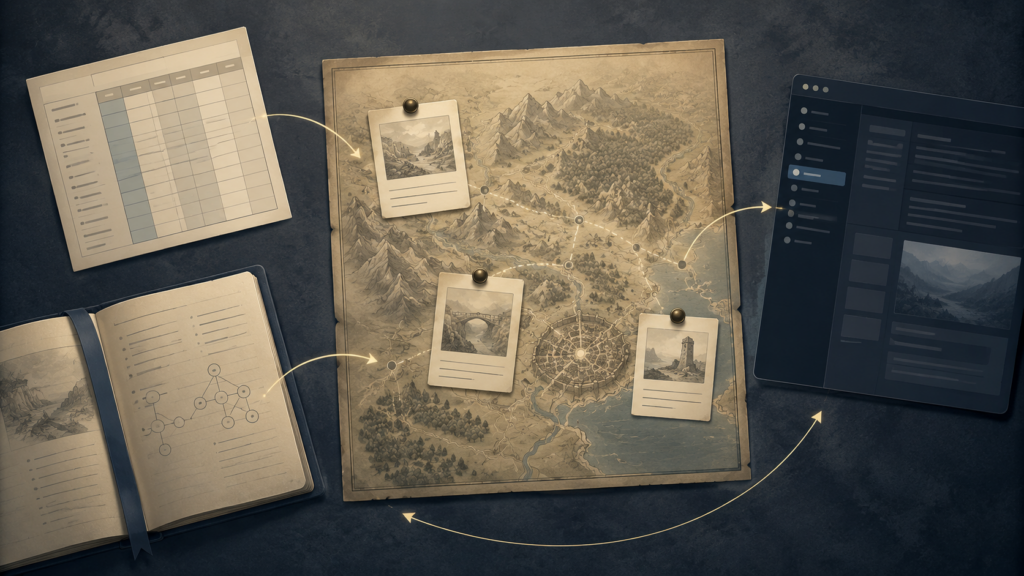

Platforms and table authority
D&D Beyond is turning Dungeon Masters into curators
Digital abundance makes more character options visible, but visibility is not approval. Every campaign still requires boundaries—and approving one option necessarily means rejecting another.
Campaign practice
The hidden structural problem behind unfinished campaigns
The practical lesson of campaign research is not that one format guarantees success. It is that every campaign structure makes demands, and fragile structures leave no room for real life.
Editorial standard
Know what kind of claim you are reading
What the evidence directly supports
A source, observation, or measurement that can be checked independently.
What the evidence may mean
An explanation of the pattern, including reasonable limits and competing readings.
What may happen next
A prediction based on visible direction, not a future event disguised as certainty.
What someone should consider doing
A proposed response with its assumptions, costs, and conditions made visible.
Opinion is not a defect. Unlabeled opinion presented as established fact is. Reports and Commentary should make the boundary visible.
Start with the evidence
Read the campaign research, then inspect the data yourself
The analysis is useful only if the limitations remain visible and the underlying results remain available for readers who want to challenge the conclusions.
The Stygian Labyrinth is an independent publication and is not affiliated with, endorsed, sponsored, or specifically approved by Wizards of the Coast.
Preparation and platform workflow
Scene Prep and the future of DM preparation
Scene Prep moves information closer to play, but it also raises a larger question: can Dungeon Masters keep their campaign material portable?
Read the Scene Prep analysis →