Guild of Lost Lore · Worldbuilding
Build worlds that create play
Places, factions, histories, and pressures designed to give the players something meaningful to discover, choose, protect, or change.
The Stygian Labyrinth · Exploring since 1999
Photo by Sean Thoman via Unsplash.
Worldbuilding with a job
The world becomes useful when the players can interact with it
You do not need a thousand years of history before the characters enter a city. You need to know what happened here, who still cares, and what the players can do about it.
Worldbuilding often becomes an attempt to answer every possible question before play begins. That produces information, but not necessarily a game. The Guild of Lost Lore begins with the details most likely to create action: unresolved history, competing power, scarce resources, shared fears, and opportunities found nowhere else.
Lore should leave handles. A player should be able to pull on the detail, test it, exploit it, oppose it, protect it, or discover that it was never completely true.
Five useful questions
Build the parts of the world most likely to produce an adventure
What happened here that still matters?
History becomes playable when the old war still defines the border, the forgotten promise remains unpaid, or the dead refuse to accept the official version of events.
Who controls this place—and who thinks they should?
Power creates decisions. Formal rulers, merchants, religious authorities, criminal groups, and local traditions may all claim different kinds of control.
What does everyone here need?
Food, water, magic, labor, protection, information, trade routes, and rare materials shape politics long before anyone begins arguing about ideology.
What are people afraid of?
A real threat, an old trauma, a neighboring power, or a danger that does not exist can still shape laws, customs, architecture, and everyday behavior.
What can the characters find only here?
A unique market, sacred spring, forbidden archive, specialist craft, unstable portal, or trusted guide gives the location a reason to matter.
What changes when the characters interfere?
A faction gains ground. A road becomes safe. A secret becomes public. Someone survives who was expected to die. The setting should remember what the players did.
Worldbuilding in practice
Three locations that begin with immediate pressure
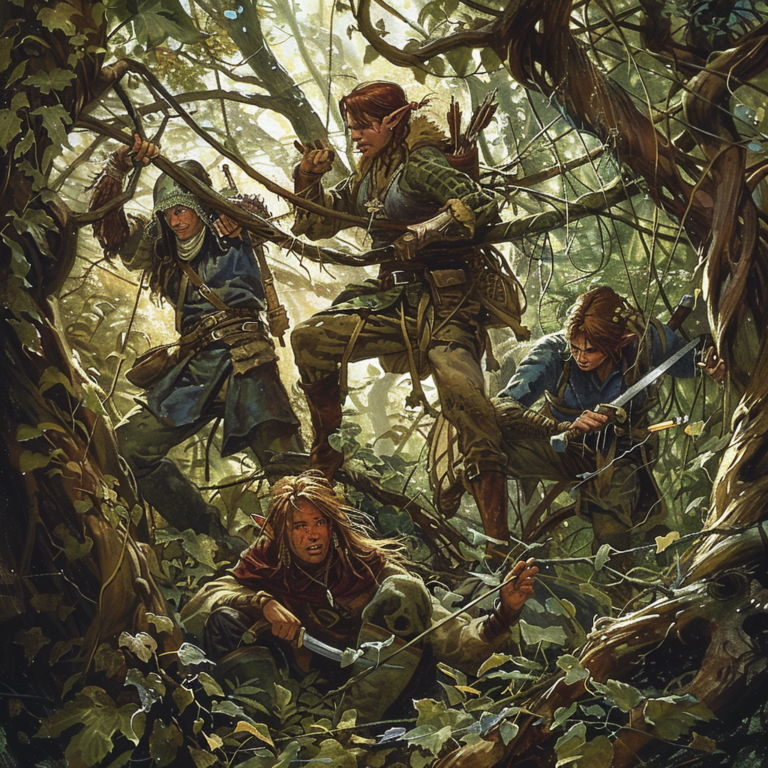
The road as territory
Tanglewood
The forest matters because its trails determine movement, trade, and control. Goblin traps reveal that someone has invested time in turning travel itself into a weapon.
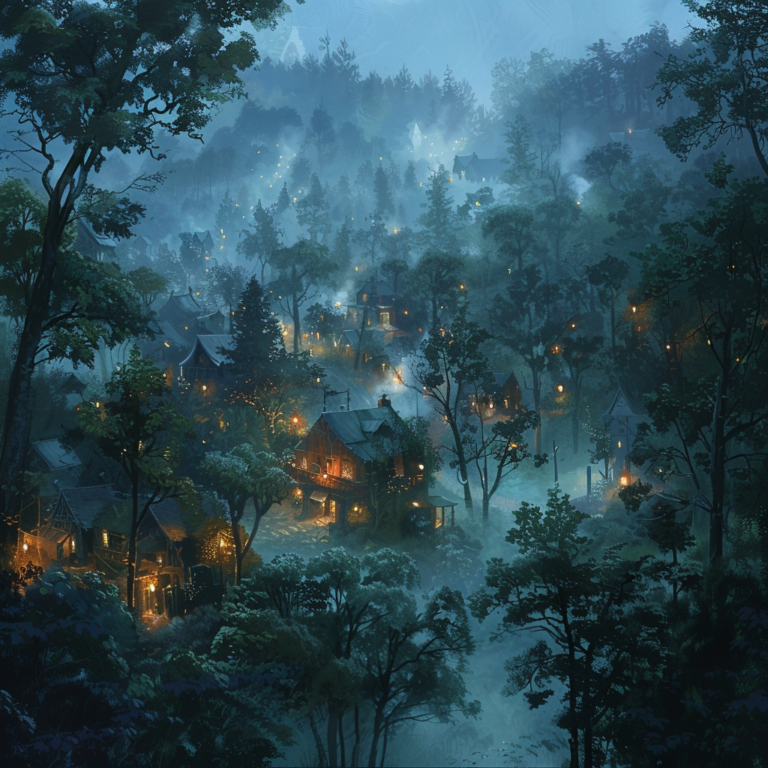
Fear shapes the settlement
Nighthollow
Barred doors, shuttered lanterns, a village shrine, and a remembered ward tell us what the people fear, what they value, and how survival has changed daily life.
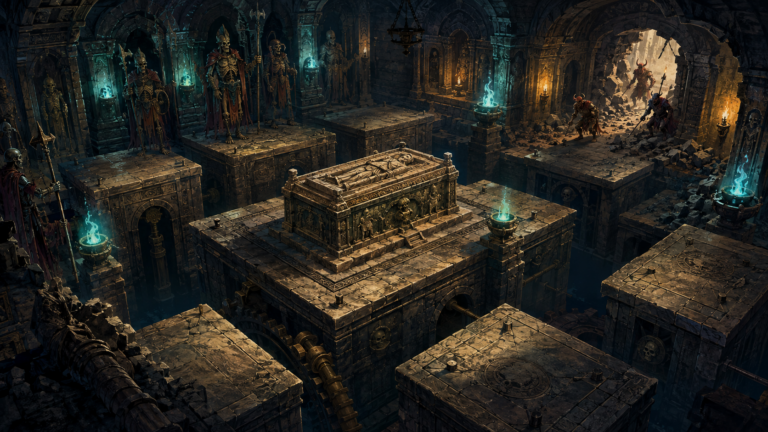
History leaves machinery behind
The Forgotten Crypt
The crypt’s architecture, wardens, floor engine, and sealed sarcophagus make the past physically active. History is not exposition; it is changing the battlefield.
Build in layers
Prepare outward only as the campaign needs it
The immediate place
What can the characters see, reach, and affect during the next session?
The local pressures
Who wants something here, what stands in the way, and what happens if nobody intervenes?
The connected region
Where do supplies, authority, threats, travelers, and information come from?
The larger world
Which distant powers, histories, or cosmological truths materially affect the campaign now?
You can always build farther later. Detail becomes easier to create once play has revealed what the group actually cares about.
The current shelf
The dedicated worldbuilding library is still being developed
No empty setting encyclopedia disguised as a resource collection
The site currently contains worldbuilding principles and playable locations embedded within encounters. Dedicated setting, faction, settlement, and worldbuilding-tool entries will appear here as they are created.
Related paths
Turn setting details into something the table can use
Encounter library
See how locations, hazards, creatures, and objectives combine into one playable situation.
Adventure library
Connect several situations through consequences, factions, and changing stakes.
Complete design guide
Move from encounter to adventure to campaign world without preparing more than play can use.
Build one place
Start with what happened here—and who still wants something because of it
A world becomes memorable through the decisions it creates, not through the number of pages written before the campaign begins.
Start the worldbuilding framework
The Stygian Labyrinth is an independent publication and is not affiliated with, endorsed, sponsored, or specifically approved by Wizards of the Coast.