Build Better RPG Adventures: Encounters, Worlds, and Problems Worth Solving
A memorable RPG adventure does not begin with a map.
It does not begin with a monster stat block, a thousand years of fictional history, or three pages explaining the political structure of a kingdom.
It begins when the players discover something that demands a decision.
A road has been trapped.
A village is being hunted.
An abandoned crypt should be empty, but something inside is still moving.
Two factions want the same thing, and helping either one will make an enemy of the other.
That is where the world stops being background information and becomes a place the players can actually explore.
The Guild of Lost Lore is a collection of RPG encounters, adventures, locations, villains, worldbuilding tools, and campaign ideas built around one principle:
Give the players something worth getting involved in.
Use these resources as written, tear them apart for useful pieces, or reshape them until they belong completely to your campaign.
The goal is not to tell you what your world should look like.
The goal is to give you things your players can do once they get there.
Start Small: Build the World One Encounter at a Time
Dungeon Masters sometimes make worldbuilding harder than it needs to be.
You do not need to know the complete history of a kingdom before the characters enter its borders.
You need to know what happens when they arrive.
An encounter is one of the smallest useful pieces of an RPG campaign. That does not mean every encounter needs initiative rolls.
An encounter happens whenever the characters face a situation that requires them to decide what to do.
They might need to:
- cross a dangerous location;
- negotiate with someone who does not trust them;
- escape an environmental hazard;
- uncover what happened in an abandoned settlement;
- protect someone who cannot protect themselves;
- decide which side of a conflict deserves their help;
- defeat an enemy whose objective is more complicated than simply killing them.
Combat may be part of the encounter.
It should not automatically be the purpose of the encounter.
A useful encounter creates a problem and gives the players room to solve it.
Drop-In RPG Encounters That Do More Than Start a Fight
Sometimes you need an encounter because the characters have entered a dangerous part of the world.
Sometimes you need twenty minutes of material because the players went in a direction you never expected.
Sometimes you simply need something interesting to happen tonight.
The Guild of Lost Lore encounter collection is designed for those moments.
These encounters can be dropped into an existing campaign, expanded into larger adventures, or stripped for locations, creatures, traps, NPCs, complications, and ideas.
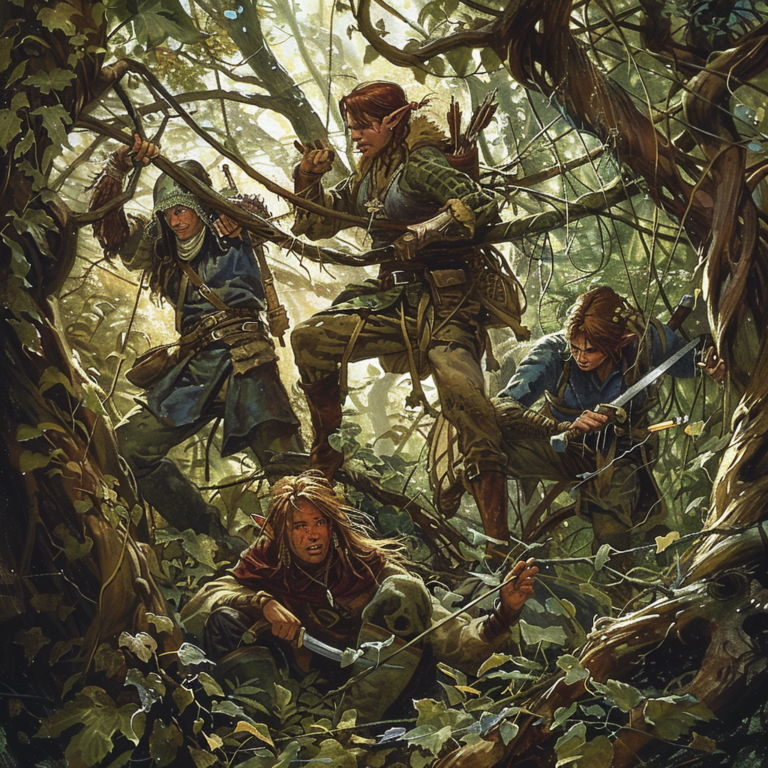
The Treacherous Trails of Tanglewood
The characters enter a forest where goblins have transformed the trails themselves into a weapon.
Traps, ambushes, misleading paths, and environmental hazards turn what could have been a simple goblin fight into an encounter about movement, observation, and survival.
Use it when you need a dangerous road, a goblin-controlled wilderness, or an encounter where paying attention matters as much as rolling initiative.
Best for: Forest travel, goblins, traps, exploration, tactical combat.
Explore The Treacherous Trails of Tanglewood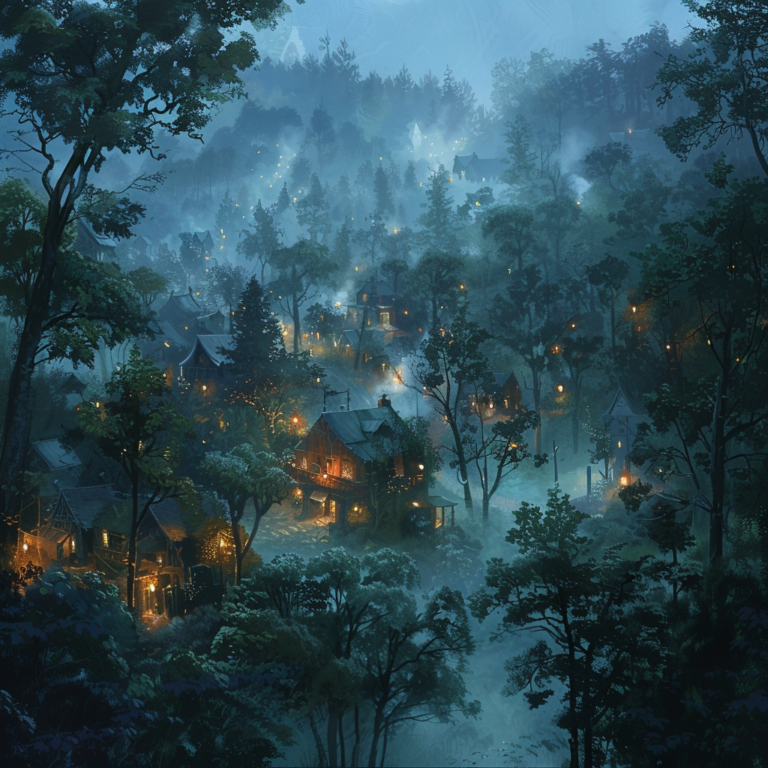
The Howling Shadows of Nighthollow
A frightened settlement is being stalked by supernatural predators, but simply destroying the creatures may not solve the problem.
Investigation, protection, combat, and the mystery behind the attacks can turn Nighthollow into anything from a single encounter to the beginning of a larger horror adventure.
Best for: Villages, undead, horror, investigation, defensive encounters.
Explore The Howling Shadows of Nighthollow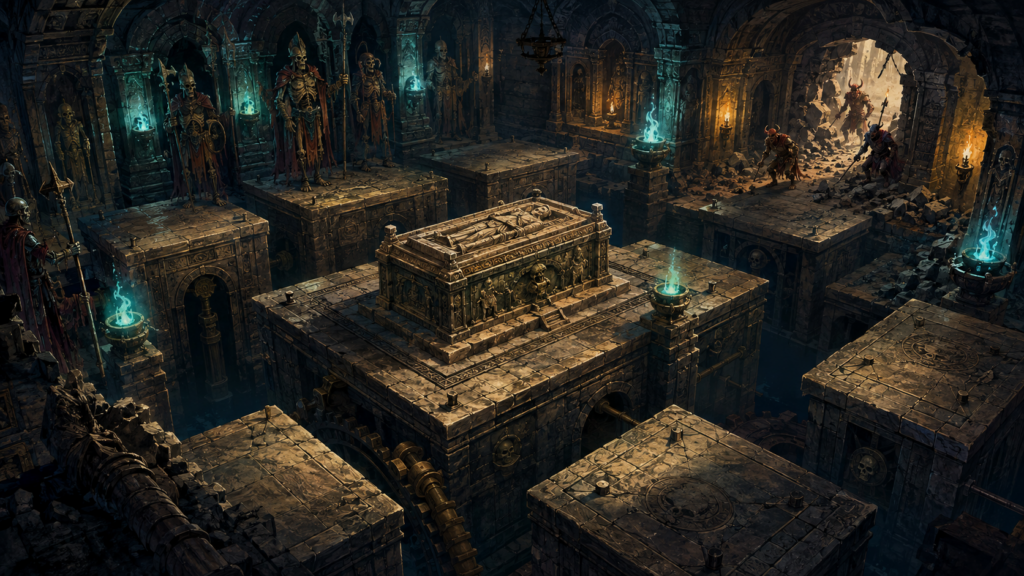
The Ruins of the Forgotten Crypt
Ancient ruins rarely remain forgotten without a reason.
A crypt gives the Dungeon Master more than another room full of monsters. It offers clues about the people who built it, the people who disturbed it, and whatever has survived beneath the earth.
Use the ruins as a dungeon encounter, an archaeological mystery, or the first clue to something buried much deeper in your campaign world.
Best for: Ruins, dungeons, exploration, ancient secrets, undead threats.
Explore The Ruins of the Forgotten CryptMore encounters will continue to be added to the Guild as the collection grows.
A Monster Is Not an Encounter Until the Players Have a Problem
Putting six goblins in a room creates a combat.
Giving those goblins a reason to be there creates an encounter.
The difference is important.
When building an encounter, start with six questions.
What is happening?
Establish the situation before deciding how the characters will resolve it.
Perhaps goblins have blocked a trade road.
Maybe villagers have barricaded themselves inside a chapel.
Perhaps someone has already opened the sealed tomb.
What do the characters need?
“Kill everything” is an objective, but it should not be the default objective.
The characters might need to rescue someone, cross the battlefield, retrieve an object, discover information, delay an enemy, escape, or prevent something from happening.
What stands in their way?
Monsters are one possibility.
So are terrain, weather, time, politics, fear, conflicting information, magical effects, traps, laws, and innocent bystanders.
What makes the obvious solution difficult?
This is the complication.
The goblins have hostages.
The bridge is collapsing.
The villain cannot be killed without destroying the artifact the characters need.
The monster is defending its young.
The person asking for help is lying.
Complications turn straightforward situations into decisions.
What can the players choose?
Players should be able to approach at least some encounters in ways you did not predict.
Fight.
Sneak.
Negotiate.
Retreat.
Investigate.
Create a distraction.
Use a spell you forgot existed.
Good encounter design creates circumstances.
The players create solutions.
What changes afterward?
The encounter should leave some mark on the campaign.
Someone survives.
Someone escapes.
A faction notices what happened.
The characters learn something.
A road becomes safe.
A village becomes abandoned.
A villain gains time.
The world changes because the players interacted with it.
That consequence is what connects an encounter to an adventure.
String Problems Together and You Have an Adventure
A RPG adventure does not require a complicated plot.
In fact, complicated plots often become fragile the moment players start making decisions.
Adventures become easier to run when you think in terms of connected problems rather than predetermined scenes.
A simple adventure might begin like this:
Something is wrong.
The characters discover the immediate problem.
Something caused it.
Investigation reveals that the obvious threat is only part of what is happening.
The problem gets worse.
Someone reacts to the characters. A new threat appears. Time begins running out.
The characters learn what is really at stake.
The information they have gathered changes the meaning of the original problem.
They must decide what to do about it.
There may be several possible solutions, none of them perfect.
The world responds.
The consequences become material for the next adventure.
That structure is remarkably durable because it does not require the Dungeon Master to predict how the players will behave.
You know what the problem is.
You know who is involved.
You know what happens if nobody intervenes.
Everything else can emerge at the table.
Adventures You Can Steal, Break Apart, or Make Your Own
Not every Dungeon Master needs the same kind of adventure material.
Sometimes you want something ready to run.
Sometimes you only want the villain.
Sometimes you want the dungeon but not the story attached to it.
Sometimes a single encounter becomes the foundation for six sessions of play.
Guild of Lost Lore adventures are designed to survive that kind of theft.
Take the structure.
Replace the monsters.
Move the location.
Change the motivation.
Turn the villain into an ally.
Pull one room out of a dungeon and put it underneath your own city.
You do not need permission from the adventure to make it fit your campaign.
That is what it is there for.
Explore Guild of Lost Lore AdventuresBuild Places That Give the Players Something to Do
Worldbuilding becomes useful when it creates play.
Knowing that a city was founded 743 years ago may be interesting.
Knowing that the founding families still control the city gates and refuse entry to anyone carrying arcane magic gives the players something to deal with.
When creating a location, you do not need to answer every possible question about it.
Start with the questions that might create adventures.
What happened here that still matters?
History becomes more interesting when the past is still causing problems.
An old war created the current border.
A forgotten ruler made a promise no one can fulfill.
A ruined fortress sits on land claimed by three families.
The dead have not forgiven what happened.
History should leave scars.
Who controls this place and who thinks they should?
Power creates conflict.
A city council might officially rule the city while the merchant guild controls its economy and a criminal organization controls the docks.
A baron may own the land while the people consider an old druid their true leader.
The moment two groups believe they should decide what happens next, you have the beginnings of an adventure.
What does everyone here need?
Food.
Water.
Magic.
Trade.
Protection.
Labor.
Information.
Rare materials.
People fight over resources long before they fight over philosophical differences.
If you know what a settlement needs and where it gets it, you already know something about its politics.
What are people afraid of?
Every place has threats.
Sometimes the threat is a dragon.
Sometimes it is famine.
Sometimes it is the neighboring kingdom.
Sometimes everyone is terrified of something that does not actually exist.
Fear influences laws, traditions, architecture, alliances, and everyday behavior.
It also creates opportunities for adventurers.
What can the characters find here that they cannot find anywhere else?
Give locations reasons to exist.
A unique market.
A forgotten library.
A sacred spring.
A monster-hunting tradition.
An impossible bridge.
A magical resource.
The tomb of someone who should not be dead.
Specificity makes places memorable.
What happens if the characters do nothing?
This may be the most important worldbuilding question.
The cult completes the ritual.
The rival family takes control.
The village runs out of food.
The monster reaches the next settlement.
The expedition disappears.
The war begins.
A world that continues moving without the characters feels alive.
A world that changes because of them becomes their campaign.
Populate the World With People Who Want Something
NPCs become easier to run when you stop trying to write complete biographies.
Start with desire.
What does this person want?
What are they willing to do to get it?
What will they refuse to do?
Who is standing in their way?
A merchant who wants wealth is usable.
A merchant who desperately needs enough money to buy their family’s freedom is playable.
A knight who wants honor is familiar.
A knight who wants to restore the reputation of a disgraced order has direction.
The same principle applies to factions.
A faction should want something.
It should have resources it can use.
It should face opposition.
And it should react when the player characters interfere.
Those reactions create the connective tissue between otherwise separate adventures.
Explore NPCs, Villains, and FactionsThe World Gets Interesting When It Feels Persistent But Mutable
Player actions should create consequences.
That does not mean punishing players for making unexpected choices.
It means allowing those choices to matter.
If the characters humiliate a powerful noble, that noble should remember.
If they save a town, someone there should recognize them later.
If they leave a villain alive, that villain now has experience dealing with them.
If they destroy the only bridge into a valley, merchants, soldiers, refugees, and monsters all have a new problem.
Consequences transform episodic adventures into campaigns.
The players begin to recognize that the world remembers what they have done.
Eventually, they stop exploring the Dungeon Master’s world.
They begin exploring the world they helped create.
Steal the Structure. Change the Skin. Make It Yours.
You do not always need another finished adventure.
Sometimes you need a reusable pattern.
A ruined temple can become a crashed spelljammer.
Bandits can become cultists.
A dragon’s territory dispute can become a feud between two noble houses.
A haunted road can become an unstable portal network.
What matters is the structure beneath the fiction.
Look for ideas you can transplant:
- someone wants something another person controls;
- something dangerous is preventing travel;
- an old agreement is beginning to fail;
- a valuable resource has been discovered;
- someone disappeared where nobody should have been;
- two groups need the characters to choose between them;
- something everyone believes about the world is wrong;
- solving one problem creates another.
Once you learn to recognize these structures, adventure ideas become much easier to generate.
The names change.
The monsters change.
The setting changes.
The problem survives.
What Does Your Next RPG Session Need?
You do not always arrive here looking for the same thing.
Start with the problem you are trying to solve.
I need something I can run tonight.
Go to the ready-to-run RPG encounters and find something you can drop into an existing campaign with minimal preparation.
Find an RPG EncounterI need an idea for the next adventure.
Browse adventure scenarios, hooks, mysteries, locations, and conflicts that can expand into one or several sessions.
Find RPG Adventure IdeasMy combat encounters are starting to feel the same.
Look for encounter structures involving objectives, terrain, complications, movement, investigation, and consequences instead of simply changing the monster.
Build Better EncountersMy campaign world feels empty.
Start with conflicts, factions, resources, mysteries, and places where something is already happening.
Explore RPG WorldbuildingI need somewhere interesting for the party to go.
Browse locations, ruins, settlements, wilderness areas, dungeons, and other places designed to generate adventure.
Explore LocationsI need people for the characters to help, hate, distrust, or accidentally make powerful.
Browse NPCs, villains, factions, organizations, and the conflicts surrounding them.
Meet the People of the GuildMy players just went somewhere I did not prepare.
Excellent! Grab an encounter, a location, a problem, and an NPC who wants something.
You probably have enough to keep going.
Find Something to Drop Into Your GameTake Something From the Guild and Put It on Your Table
The Guild of Lost Lore exists to collect useful things.
Some are complete encounters.
Some are adventures.
Some are locations, monsters, factions, rules, strange ideas, and pieces of worlds that never existed until someone needed somewhere for the players to go.
You do not need to use all of it.
You should not use all of it.
Take whatever makes your next session more interesting.
Change whatever does not fit.
Ignore anything you do not need.
Then see what your players do with it.
Because a world really starts to matter when somebody can change it.